Moving abroad means facing rules you didn’t see coming. For many professionals and workers heading to Bahrain, medical clearance stands as a key step in the journey. Among all tests, X-Rays carry special weight. They can make or break your application if you don’t understand how Bahrain evaluates them.
For expatriates, Bahrain’s screening processes differ from those in other countries due to public health priorities and regional disease concerns. This comprehensive guide explains how to assess X-ray reports, what authorities look for, and how to prepare to avoid delays. GAMCA Medical Appointments blends medical insight with pragmatic tips that first-time applicants and repeat travellers alike will find valuable.
Why X-Rays Matter for Expats in Bahrain
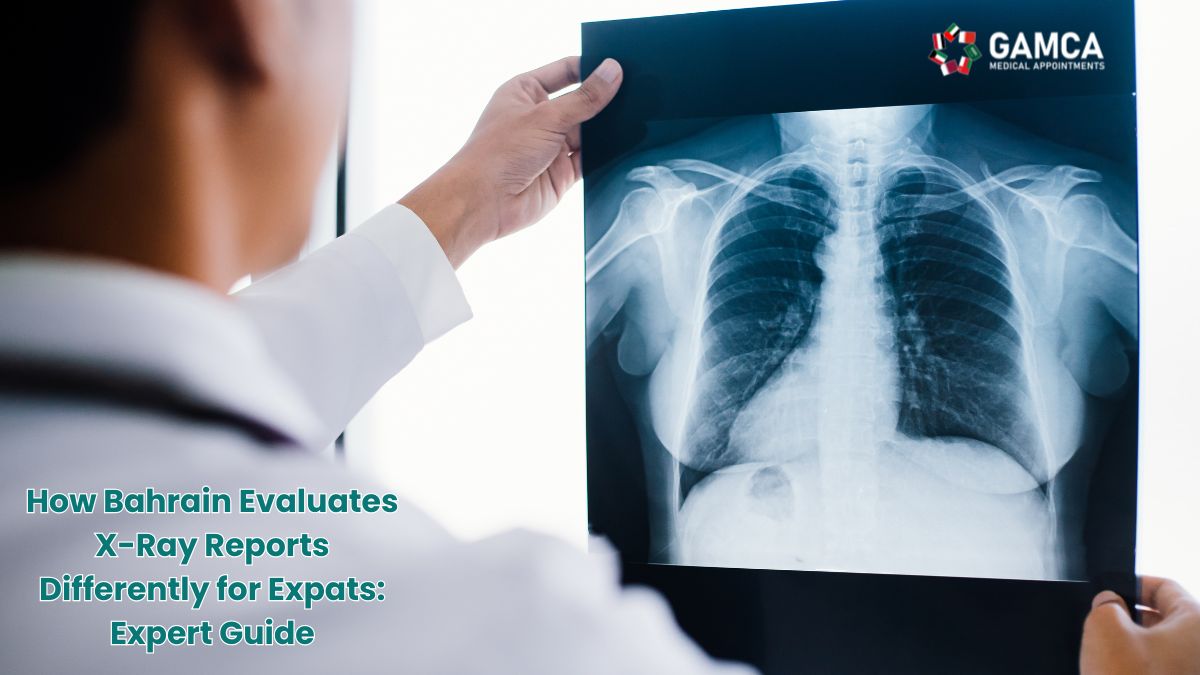
Radiographic imaging serves a dual purpose in Bahrain’s medical clearance ecosystem. First, it checks for conditions that could pose serious public health concerns. Second, it confirms the applicant’s overall fitness for the work they intend to undertake. Unlike simple vision or blood tests, X-rays reveal hidden patterns in the lungs and other chest structures that explicit examinations can’t detect.
Recent medical clearance data suggest that abnormalities on chest imaging account for nearly one-third of additional follow-ups requested during pre-employment screenings in Gulf countries. It highlights how critical accurate evaluation really is when you submit your results for clearance.
Pro-Tip: A large percentage of rejections in Bahrain are due to the name on the X-ray report not exactly matching the passport (e.g., a missing middle name).
GAMCA Standards for X-Ray Interpretation
The Gulf Approved Medical Centers Association, commonly known as GAMCA, operates through an established network that unifies medical standards across Gulf Cooperation Council states, including Bahrain. These standards extend to imaging protocols, report language, documentation, and follow-up procedures.
In practice, that means every X-Ray must conform to specific criteria before being accepted as part of your file. Reports require clear identification of patient data, imaging parameters, and professional signatures. Unclear or abbreviated reports are a common reason for rejection or requests for repeat imaging.
Medical professionals conducting these tests must work in GAMCA-approved medical centres. It’s where GAMCA Medical procedures intersect with bureaucracy: unauthorized clinics or ad hoc imaging services risk having their reports dismissed.
Key Differences in How Bahrain Reviews X-Rays for Expats
Bahrain’s approach differs from some other countries in three main ways. First, authorities emphasize early detection of tuberculosis and other infectious conditions that could impact public health at scale. High humidity and close-quartered living make respiratory conditions a major focus here.
Second, authorities require higher labeling precision. Reports must use internationally accepted diagnostic codes and clearly state findings in text form rather than shorthand.
Third, the reviewing body may request comparative imaging if recent X-Rays show changes from earlier scans. It often occurs when applicants move from one Gulf state to another within a short period, and the new imaging picks up an unclear shadow or possible lesion.
What Radiologists Look for in Your X-Ray Report
Evaluators focus principally on the lungs, heart size, bony structures, and diaphragm contours. Any asymmetry, nodules, fibrosis, or unexplained opacity triggers further review. The presence of prior surgical hardware, old fractures, or congenital variations often requires explanatory notes from the interpreting radiologist.
Experienced clinicians emphasize that the wording of abnormalities matters. For example, a “possible opacity” without definitive context may lead to automatic follow-up, whereas “resolved post-treatment changes” conveys clinical reassurance.
Approved Imaging Centers Make the Difference
If you hope to avoid back-and-forth with Bahrain’s medical clearance team, start with GAMCA-approved medical examination centres. These facilities understand exactly what constitutes a complete, acceptable report. Their imaging staff follow standard positioning protocols and deliver reports that meet formal requirements created by Gulf health authorities.
Recent applicant surveys show that reports from approved centers are accepted on the first submission in more than 85% of cases, compared to under 60% for reports from non-aligned clinics. That statistical gap reveals the practical advantage of choosing certified locations for your X-Ray and other clearance tests.
Common Pitfalls in X-Ray Submission and How to Avoid Them
One major issue occurs when applicants submit digital images without a readable report attached. Bahrain’s reviewers cannot interpret raw DICOM files without physician interpretation notes. Similarly, submitting films without proper patient identifiers may result in rejection.
Another frequent problem is insufficient documentation on prior conditions. Radiologists at approved centers habitually add explanatory comments for scars, old injuries, or benign findings. This transparency prevents confusion during review.
Expert Tip: Don’t just bring the report; get the digital copy. Bahrain’s medical committees occasionally request the raw image if the printed report is ambiguous. Also, ensure your passport number is on the digital image — handwritten labels will face rejection.
GAMCA Medical Appointment Workflow for X-Rays
When you book your GAMCA medical appointment, plan. X-Ray imaging often precedes blood work and physical exams. Approval timelines depend on the completeness of your documentation, the clarity of findings, and whether follow-up imaging is needed.
Data from medical clearance processing centers shows that complete submissions with error-free X-Ray reports move through review roughly 40% faster than those requiring clarification. That efficiency matters if your employment contract or residence permit deadline looms.
How Long Does the Review Typically Take?
On average, Bahrain’s medical review of X-Ray components takes between three and five business days after submission. This timeframe assumes no additional imaging is requested. If follow-up scans or specialist reports are necessary, the process can extend by weeks, particularly if you have to return to an approved center for repeat imaging.
Schedule your GAMCA medical appointment today!
Tips for Smooth X-Ray Submission
Start with an up-to-date scan. If your last X-ray is more than 6 months old, consider getting a new one at a certified center. Ask your radiologist to use clear diagnostic language and to include comparative comments if old films are available.
Ensure that your GAMCA Medical Registration details match exactly what appears on the imaging report. Any mismatch in name, passport number, or date of birth can trigger a hold on your file.
Cost Considerations and Expectation Management
Fees for X-Ray imaging vary by location and provider, but choosing an approved facility often reduces the risk of rework. Remember that delays cost more than a proper initial submission. Employers and applicants alike benefit from efficient processing because unnecessary repeat tests inflate both time and expense.
Country of Origin | Medical Examination Fee (Estimated) | Registration/Slip Fee | Total Approx. (USD) |
India | ₹5,500 – ₹6,500 | $17 | $80 – $90 |
Pakistan | PKR 18,000 – 22,000 | $17 | $75 – $85 |
Philippines | PHP 4,500 – 5,500 | $17 | $90 – $105 |
Sri Lanka | LKR 25,000 – 30,000 | $17 | $85 – $95 |
Bangladesh | BDT 8,500 – 10,000 | $17 | $80 – $95 |
How Bahrain's Approach Protects Public Health
The rigor applied to X-Ray review reflects broader public health goals. Bahrain remains vigilant against tuberculosis and other communicable diseases that can spread rapidly in densely populated areas. Accurate imaging helps authorities identify risks early, protect communities, and ensure a healthy workforce for both citizens and residents.
Real Experiences From Expats Who Navigated the Process
Many expats share similar stories. One common theme emerges: thorough, clear X-Ray documentation from approved centers made the difference between a smooth medical clearance and repeated delays. These firsthand accounts stress the value of preparatory steps and attentive follow-through with clinicians.
Frequently Asked Questions
Radiographic screening helps identify infectious conditions, structural anomalies, and other health factors that may impact public health and employment suitability. Bahrain’s approach aligns clinical data with safety goals for visitors and long-term residents.
Reports must contain clear findings, approved diagnostic terms, proper identifiers, and interpretations from accredited radiologists. Using GCC Medical Appointment systems helps ensure you comply with these expectations.
If the reviewing team finds missing data or unclear findings, they will request follow-up imaging or clarification. Approved centers reduce this risk by providing complete, compliant reports from the outset.
Older imaging may be accepted if it is recent enough and accompanied by explanatory notes. However, many applicants choose fresh scans to avoid compromises in clarity or relevance.
Conclusion
Understanding how Bahrain evaluates X-ray reports for expats empowers you to navigate the medical clearance process with confidence. By selecting approved centers, securing clear documentation, and preparing intelligently, you shorten review times and reduce stress. Contact GAMCA Medical Appointments and get your GCC slip now.
