Quick Answer: How Are GCC Medical Reports Verified?
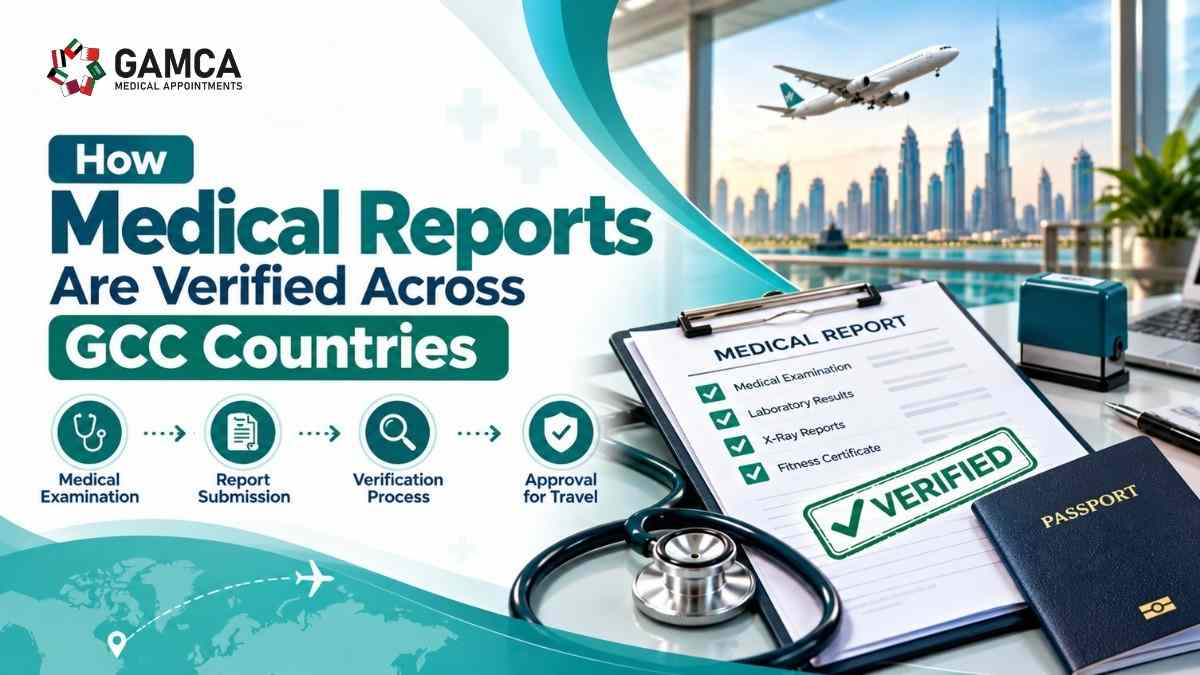
GCC countries verify expatriate medical reports electronically through the Gulf Health Council’s centralized Wafid (formerly GAMCA) registry. Once an accredited clinic completes your laboratory and radiological exams, results are uploaded directly against your passport number, allowing consulates and immigration departments to confirm your “Fit” status instantly without relying on paper documentation.
Critical Requirements, Eligibility & Key Guidelines
Completing the Gulf immigration health process requires strict alignment between your physical identity, clinical findings, and digital records. Member states—including Saudi Arabia, the United Arab Emirates, Qatar, Oman, Kuwait, and Bahrain—rely on a unified verification protocol designed to prevent tampering and uphold public health standards.
- Centralized Digital Indexing: Paper certificates are no longer evaluated in isolation. The central Gulf Health Council database pairs every approved clinical examination with an electronic file tied strictly to your unique passport number and nationality.
- Accredited Diagnostic Center Network: Medical screenings are recognized only if conducted at an officially empaneled, authorized medical center. Tests conducted at non-accredited private laboratories or unauthorized local hospitals cannot be transmitted to GCC visa systems.
- Multi-Layer Identity Authentication: At the diagnostic clinic, staff verify the applicant’s physical identity via original passport verification, digital photograph capture, and biometric (fingerprint) cross-checks to ensure the person examined matches the visa applicant.
- Standardized Diagnostic Panels: Clinical reports compile findings across infectious disease serology (HIV, Hepatitis B and C, Syphilis), chest radiography (evaluating past or active pulmonary tuberculosis), and baseline metabolic/physical health.
- Online Transparency and Status Tracking: Applicants do not need to guess whether their records have cleared consular standards; you can independently check your GAMCA medical status online to confirm when your laboratory results transition from “Under Process” to an official “Fit” record.
GCC Verification Architecture: Component Breakdown
Verification Layer | Primary Objective | Verification Mechanism | Practical Consequence of Failure |
|---|---|---|---|
Applicant Identity Layer | Prevent impersonation and proxy testing | Passport scan, facial photo, and biometric capture | Immediate exam cancellation; listing for identity fraud |
Clinical Diagnostic Layer | Screen communicable diseases and organ health | Dual-read chest X-rays, blood serology, and physical evaluation | Entry marked “Unfit”; regional visa processing blocked |
Central Registry (Wafid) Layer | Secure, tamper-proof data storage | Encrypted digital upload mapped to passport number | Missing online record stops embassy visa stamping entirely |
Consular & Border Layer | Final clearance for residency issuance | Electronic query by visa officers at mission or port of entry | Visa rejection or detention if electronic record is absent |
Step-by-Step Verification Workflow (Avoiding Delays and Rejections)
Appointment Slip Generation and Demographic Matching
Before visiting a center, you create an official booking slip. This document generates a unique tracking code that assigns you to an accredited clinic in your selected city.
The Pitfall: Inaccurate input during this phase—such as swapping passport digits, misspelling your surname, or selecting the wrong destination country—renders the clinic unable to upload your verified test results. Use the verified portal to Book Your GAMCA Medical Appointment with exact passport matching to ensure your digital file initiates properly.
In-Person Biometric and Physical Verification
When you arrive at the clinic, staff check your physical passport against your appointment slip in the system. Staff log your biometric fingerprints and a digital photo directly into the system before drawing any samples.
The Pitfall: Presenting a damaged passport, an expired travel document, or mismatched photos. If the clinic cannot verify consistent identity, testing stops, and you forfeit your scheduled appointment fee.
Laboratory Examination and Portal Transmission
Diagnostic specialists evaluate blood samples for infectious agents and review chest radiographs for pulmonary scars or active infections. The medical director signs off on the clinical data, and the accredited clinic transmits the standardized outcome directly into the Gulf Health Council network.
The Pitfall: Relying solely on physical paper copies handed to you by clinic technicians. An embassy or visa service center only accepts the status if it appears live on the centralized electronic database.
Consular Retrieval and Border Clearance
During the visa stamping process, foreign missions and immigration ministries pull your digital clearance directly from the centralized database using your passport number. When the profile reflects an authenticated “Fit” assessment, visa issuance moves forward.
The Pitfall: Proceeding to your visa or biometric appointment after the medical validity window has lapsed. GCC health clearances generally expire within 60 to 90 days from the date of issue.
What Most People Get Wrong: The "Paper Slip vs. Digital Record" Trap
A frequent and expensive mistake expatriate applicants make is treating a physical medical document as their primary proof of fitness.
The Scenario:
A software engineer preparing for a placement in Riyadh received a stamped paper certificate from an administrative staff member at a local diagnostic clinic stating “Medically Fit.” Assuming his requirements were fulfilled, he booked his consular submission appointment for visa stamping that same week.
The Breakdown:
At the visa center, the processing desk entered his passport details into the system, only for the application to be rejected instantly: the system showed “No Record Found.” Although the clinic printed a preliminary physical sheet, their laboratory database had an electronic transmission glitch, so the mandatory digital upload to the Gulf Health Council server was never completed.
The Solution:
Never submit visa paperwork or book non-refundable flights solely based on a printed report. Always verify that your passport number shows an official, validated “Fit” status on the central portal before attending your visa stamping appointment or submitting biometrics.
Schedule your GAMCA medical appointment today!
Frequently Asked Questions
No. GCC embassies and consular sections only accept medical clearances uploaded by diagnostic facilities officially accredited by the Gulf Health Council. Tests completed at standard, non-empaneled hospitals or private local labs cannot be entered into the verification network and will be rejected outright.
24 to 72 hours. Under standard operational conditions, diagnostic centers upload your lab and radiology results within 1 to 3 business days following your physical examination, provided no secondary confirmatory testing is required.
The report cannot be verified by immigration authorities until corrected. Because your health record is tied strictly to your passport number, any character discrepancy will prevent embassy systems from locating your file. If you detect typographical errors in your biological data or passport details, you must obtain official medical report corrections through the diagnostic center before submitting your visa file.
Yes. Because the Gulf Health Council maintains a shared digital network for expatriate health surveillance, an officially declared “Unfit” status due to disqualifying communicable conditions is synchronized across all member states, preventing applicants from bypassing health requirements by reapplying to a different Gulf destination.
