Quick Summary: Do You Need A GAMCA Medical Appointment For Qatar?
Qatar mandates pre-departure medical screening to approve employment visas. Applicants residing in Qatar Visa Center (QVC) countries—such as India, Pakistan, Bangladesh, Nepal, Sri Lanka, and the Philippines—must complete medicals directly at a QVC. Candidates applying from non-QVC jurisdictions, or those specifically instructed by recruitment agencies, still require an accredited GCC screening slip.
Preparing for an overseas career transition brings significant excitement, yet shifting visa compliance rules can create sudden roadblocks. Securing a work permit requires completing medical checks that adhere strictly to Gulf Health Council standards. Even a minor booking error can disrupt your travel plans and put your employment contract at risk.
Many first-time applicants feel confused when coordinating pre-departure health clearances. Booking a verified GAMCA Medical Appointment ensures your files are processed through certified diagnostic clinics recognized across the Gulf region.
Gulf immigration data reveals that administrative filing errors and incorrect testing center selections cause nearly 31% of pre-departure visa delays. Qatar maintains high public health benchmarks, screening arriving expatriates for infectious diseases and vital metabolic markers. Knowing whether your visa workflow routes through a regional visa hub or requires a specialized booking slip prevents costly mistakes.
Qatar Medical Systems Explained: QVC, Wafid, And The Medical Commission
Qatar has reorganized its pre-employment clearance process into distinct administrative channels. Years ago, every Gulf-bound worker relied exclusively on standard GCC slips. Today, Qatar operates dedicated Qatar Visa Centers in major worker-sending countries.
A QVC provides biometric registration, electronic contract signing, and clinical evaluations under a single roof. However, workers from nations without an active QVC hub must follow the traditional Wafid booking process. Initiating an official Qatar medical registration connects you to accredited partner hospitals equipped to handle standardized Gulf health evaluations.
After landing in Doha, every worker completes final clearance through the Medical Commission or approved local health facilities before obtaining a Qatar Residence Permit (QID). Each system plays a distinct role in securing your employment status. Verify the exact instructions on your visa approval document to choose the right path.
Comparing Medical Screening Routes For Qatar
Choosing between an integrated overseas visa center and an accredited GCC slip depends entirely on your location and application type. The comparative guide below highlights the key operational differences.
Clearance Requirement | Qatar Visa Center (QVC) Pathway | Accredited Wafid / GAMCA Pathway | Qatar Medical Commission (In-Country) |
|---|---|---|---|
Applicable Regions | India, Pakistan, Nepal, Sri Lanka, Bangladesh, Philippines | Non-QVC territories and specialized professional visas | All arriving foreign workers entering the State of Qatar |
Booking Procedure | Booked online through the official Qatar Visa Center platform | Generated centrally and routed to an accredited GCC partner clinic | Scheduled by the sponsoring employer within 30 days of arrival |
Core Evaluations | Blood serology, digital chest X-ray, vision check, physical exam | Infectious serology panels, chest radiography, clinical vitals | Confirmatory infectious blood assays, chest X-rays, biometrics |
Portal Integration | Direct, real-time data sync with the Qatar Ministry of Interior | Uploaded directly to the Gulf Health Council medical database | Directly tied to the issuance of your official Qatar ID (QID) card |
When Do You Need An Accredited Screening Slip?
Candidates frequently ask why GCC appointment slips remain relevant if integrated visa centers exist. The answer lies in international labor logistics and geographical access.
First, Qatar recruits skilled talent from dozens of countries without physical QVC branches. For example, professionals traveling from various African, Eastern European, or Middle Eastern regions must schedule their tests through accredited GCC clinics. Without an approved diagnostic slip, regional clinics cannot file your clearance with the central immigration authorities.
Second, specific recruitment agencies and government entities issue custom directives for particular technical roles. These workflows require applicants to secure physical verification slips before submitting their passports for stamping. Always review your formal visa approval letter, consult your sponsor, and follow the exact channel assigned to your file.
Clinical Parameters Tested And Rejection Factors
Gulf health standards follow zero-tolerance rules for contagious and severe chronic conditions. Diagnostic technicians evaluate three primary health markers during your screening session.
Serology assessments check blood samples for infectious agents. Laboratories run sensitive assays for HIV, Hepatitis B, Hepatitis C, and syphilis. A confirmed positive or reactive result for any of these markers results in automatic disqualification.
Chest X-rays evaluate your respiratory tract. Radiologists check for active tuberculosis, pleural adhesions, and old fibrotic scar tissue. Even resolved childhood lung infections can leave harmless scars that require extra documentation. The factors that often result in an GAMCA unfit result include:
1.Active viral markers, including reactive Hepatitis B surface antigens or Hepatitis C antibodies.
2.Structural pulmonary calcifications, pleural thickening, or untreated tuberculosis signatures.
3.Uncontrolled diabetes with elevated glucose markers indicating metabolic distress.
4.Extremely high blood pressure that poses acute occupational risks in demanding climates.
Customer Experiences For You
Managing Previous Lung Scarring For A Mechanical Engineer
A senior mechanical engineer from Nigeria secured a managerial role on a port project near Doha. During an early health check, his chest X-ray revealed subtle scarring from a childhood pneumonia infection. He worried this would cause an immediate disqualification during his official pre-travel screening.
Our team advised him to gather complete medical notes, including recent clear sputum cultures, before his exam. He presented these certified records to the attending radiologist at the accredited diagnostic facility. The physician matched the records with his current chest film, verified that the tissue was completely inactive, and issued a clear health certificate.
Handling Clearance From A Non-QVC Origin Country
An electrical systems supervisor living in Kenya received a direct employment contract from a Qatari engineering group. Because Kenya does not currently host an active QVC hub, his employer instructed him to obtain an accredited GCC screening slip. The local recruiting agency initially gave him incorrect booking links, leaving his travel plans in limbo.
He contacted our support team, registered his passport details, and received a booking slip for an accredited clinical center in Nairobi. The clinic ran the standard blood panels and chest imaging and uploaded the cleared results within 48 hours. The sponsoring company verified his records online and issued his flight tickets without further delay.
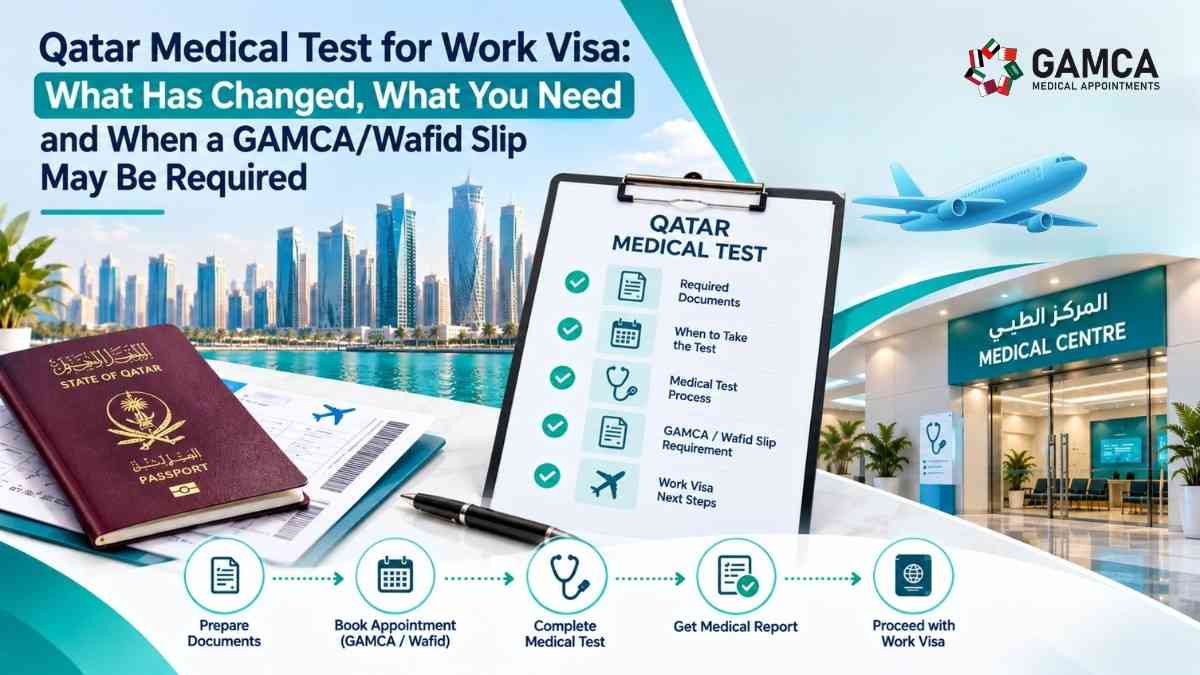
Four-Step Medical Clearance Roadmap
Navigating international immigration steps requires a calm, organized approach. Following this structured sequence helps you avoid administrative delays and finish your evaluations on time.
Audit Documentation and Passport Details
Confirm that your international passport has at least six months of remaining validity. Check that your spelling, date of birth, and nationality match across all company offer letters and government papers.
Practitioner Insight: Complete an independent blood test at a private local clinic two weeks before your appointment. Treating minor infections early helps you avoid unnecessary surprises on your official screening record.
Generate Your Official Appointment Slip
Submit your exact passport details to our booking portal to secure your slot. The system matches your location to an accredited diagnostic center that complies with GCC health mandates.
Practitioner Insight: Never attempt to handwrite or edit clinic details on your generated slip. Diagnostic centers verify registration codes digitally, and they reject altered documents on the spot.
Complete Your Physical and Diagnostic Exams
Arrive at your assigned medical clinic well-rested, fully hydrated, and dressed in loose, comfortable clothes. Bring your original passport, printed appointment slip, national identification cards, and four passport-sized photos.
Practitioner Insight: Fast for eight hours before your morning appointment. Skipping sugary drinks and high-sodium meals helps stabilize your blood sugar and blood pressure during intake triage.
Verify Your Results Online and Finalize Visa Processing
Authorized clinics upload diagnostic reports directly to the Gulf Health Council’s central platform within two to four business days. Applicants can securely check your medical status online using their passport number and nationality code.
Practitioner Insight: Always keep both digital and physical copies of your final clearance certificate. Border immigration officers at Hamad International Airport may ask to see your physical slip during entry checks.
Required Documentation And Practical Preparation
Arriving at your appointment without paperwork causes stressful delays and rescheduled visits. Assemble your documents the night before to ensure a smooth check-in.
1.Original international passport with at least six months of remaining validity.
2.Printed official appointment confirmation slip displaying the assigned clinic code.
3.Government-issued national identity card with clear photocopies.
4.Four recent passport-sized photographs taken against a plain white background.
5.Certified discharge summaries or physician notes for any past surgical procedures.
Staying hydrated makes blood draws faster and easier. Avoid smoking, caffeine, and heavy physical exercise for 24 hours before your screening. These simple habits help keep your resting heart rate and blood pressure within the required ranges.
Schedule your GAMCA medical appointment today!
Frequently Asked Questions
The Gulf Health Council records an unfit medical assessment directly in its central immigration database. This status prevents Gulf work visa issuance for several months to two years, depending on the diagnosed condition. Applicants who suspect a testing error can submit an official appeal through authorized medical boards within thirty days.
The central scheduling system automatically assigns accredited clinics based on geographic proximity and daily center capacity limits. This automated routing prevents local clinic overcrowding and maintains impartial testing standards. Applicants must complete their evaluations only at the specific facility listed on their official slip.
A standard Gulf pre-departure medical certificate remains valid for sixty days from the date of issue. You must complete your visa stamping, air travel, and initial immigration processing within this two-month window. If your travel is delayed beyond sixty days, you will need to repeat the full medical examination.
Accompanying spouses undergo the standard adult screening panel, including serology testing and chest radiography. However, children under eleven years old follow modified pediatric protocols and generally skip standard chest X-rays unless a specific health condition warrants it. Parents must present certified pediatric vaccination cards and verified birth certificates during the appointment.
After arriving in Qatar on a work entry visa, your employer arranges an appointment with the Qatar Medical Commission in Doha. This in-country check confirms your overseas results through a repeat blood test and chest X-ray. Clearing this final step is mandatory before authorities issue your official Qatar Residence Permit (QID).
Protect Your Qatar Relocation Timeline
Starting a new job in Qatar is an incredible career milestone that requires careful administrative planning. Relying on outdated advice or booking the wrong medical appointment can lead to costly delays and missed opportunities. Reviewing your visa requirements early helps ensure a smooth transition.
GAMCA Medical Appointments helps you manage your pre-departure health clearances with complete clarity. Our experienced team assists you with accurate clinic registrations, document checklists, and online result tracking. Scheduling your GAMCA Medical Appointment through an accredited service gives you confidence at every stage of your journey.
Take the first step toward your new role today. Reserve your appointment, follow our pre-test guidelines, and travel to Qatar with total peace of mind.
